Why Hazard Identification Fails: The 5 Hazard Types Workers Miss
Risk assessments are not the problem. However, hazard identification is the key factor. Most workplace injuries and ill health cases involve hazards that were present, visible, and familiar, yet no one acted on them.
What Is Hazard Identification
Hazard identification is the process of identifying what could cause injury or illness in your business. Identifying hazards is the first step of the HSE’s five-step risk assessment process.
What Is a Hazard
A hazard is anything with the potential to cause harm. That includes physical objects, substances, conditions, and work practices. As a result, workers often overlook hazards that do not look immediately dangerous.
Hazard vs Risk: Why the Difference Matters
A hazard is the source of harm, for example, a toxic chemical. Risk is how likely that hazard is to cause harm, and how severe that harm could be. Therefore, you cannot evaluate risk accurately until you first identify the hazard. These are two separate steps, and the HSE’s guidance treats them that way deliberately.
The Scale of the Problem
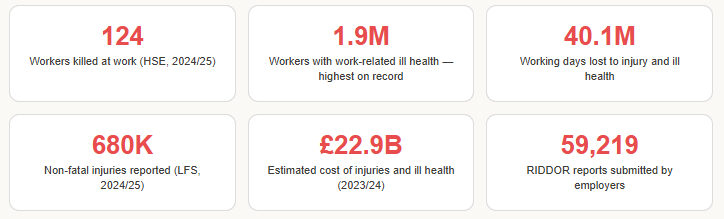
Over 1.9 million workers suffered from work-related ill health in the latest HSE annual statistics, the highest number on record. These are not all single catastrophic events. Instead, many result from hazards that built up over months and years while workers and managers treated them as normal. Consequently, that pattern starts with poor hazard identification.
Why Hazard Identification Fails in Most Workplaces
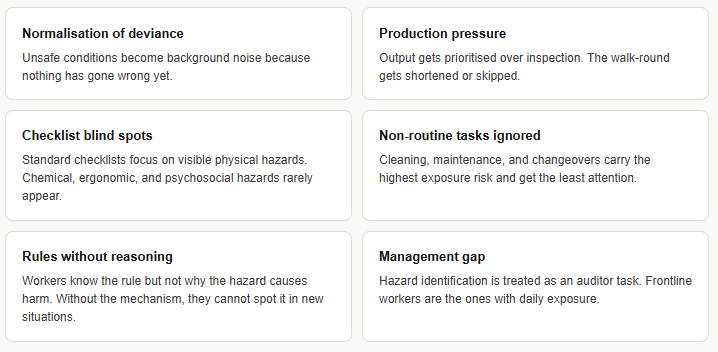
The biggest problem is not a lack of rules, but most workers fail to identify hazards that are hidden, familiar, or slow to develop. They rely on routine, experience, and quick visual checks. For example, when a hazard has never caused an incident, people treat that as proof that everything is fine. It is not. In fact, it is just a matter of time.
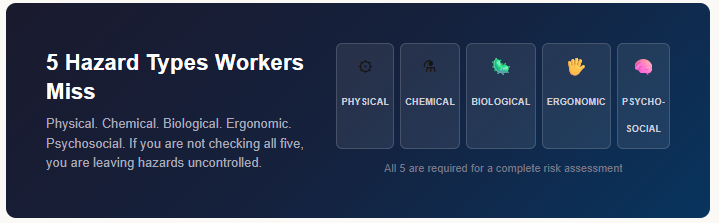
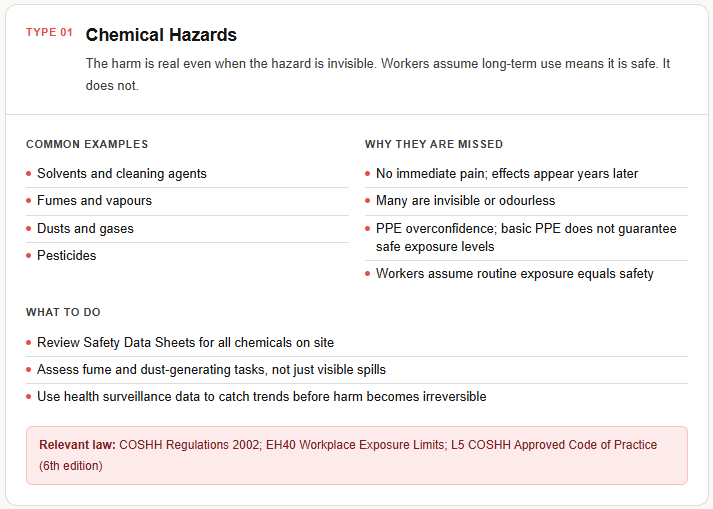
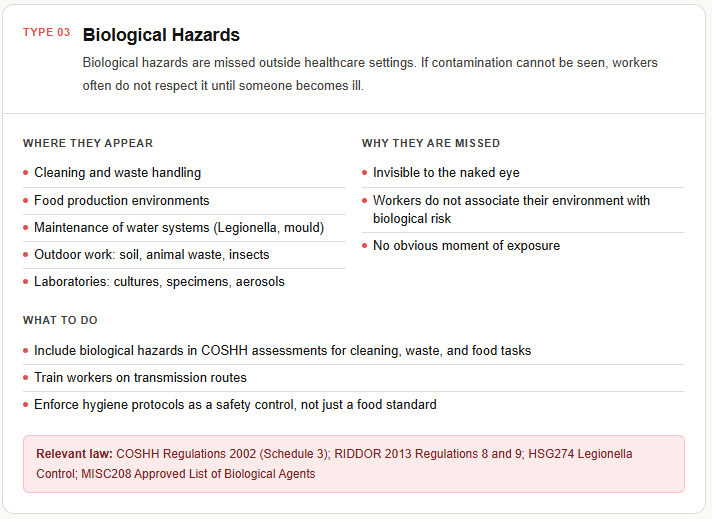
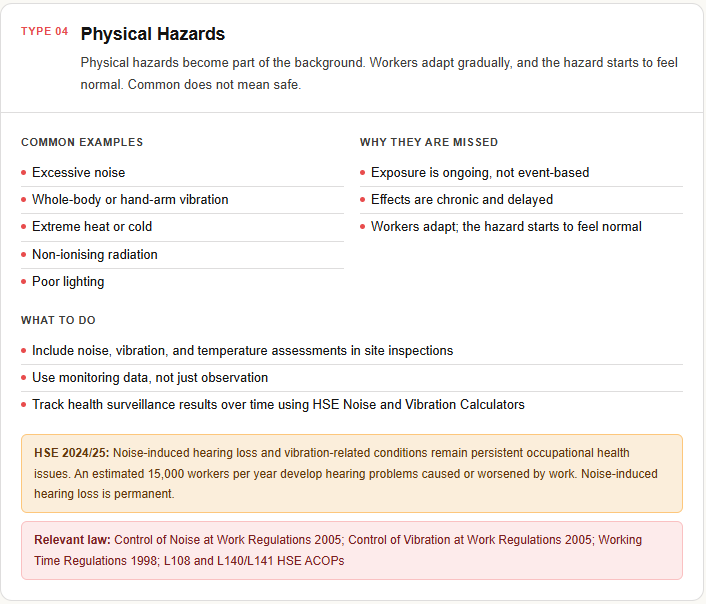
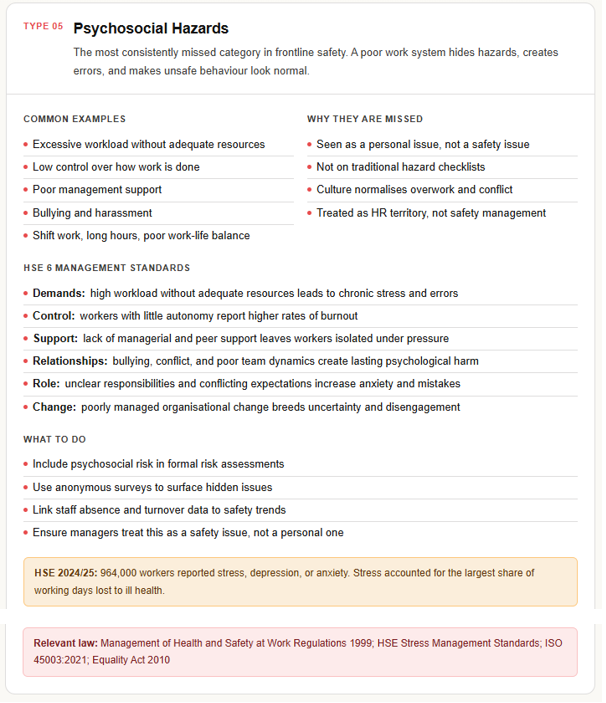
The 5 Hazard Types
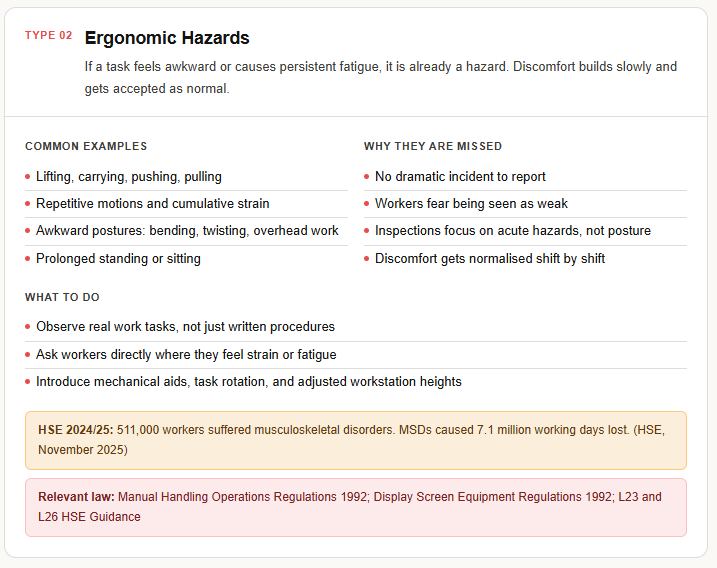
You can read our blog post on Ergonomics here
Controlling Hazards: The Hierarchy
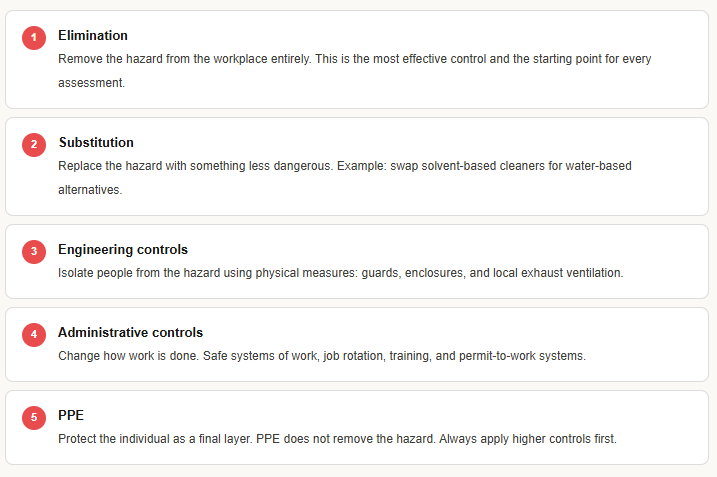
Identifying a hazard without controlling it changes nothing. The Hierarchy of Controls sets the order of priority from top to bottom. First, try to eliminate the hazard. If that is not reasonably practicable, work through substitution, engineering controls, and administrative controls before reaching PPE. Furthermore, PPE is not a control strategy. It is the last resort after you apply every other measure.
Improve Your Hazard Identification From Tomorrow
Start by asking one question at the beginning of every shift: what hazard here could cause harm today that we are treating as normal? Hazard identification is a disciplined habit, not a one-off exercise. Moreover, building that habit into your daily routine is what actually prevents injury. Here are six actions you can take straight away.
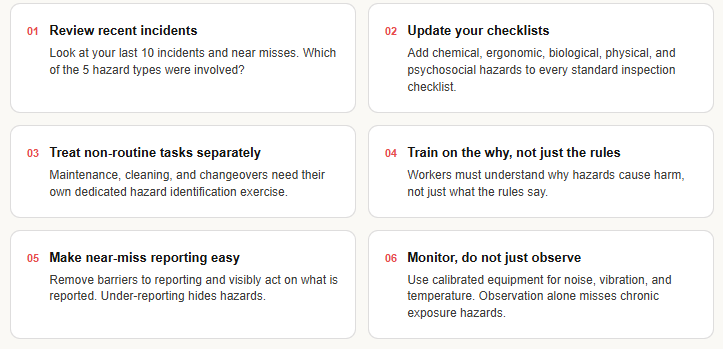
Additionally, effective hazard identification goes beyond slips, trips, and falls. The hazards that cause the most harm are the ones nobody questions.
Link to full YouTube Video
Nobody gets hurt. Everybody stays healthy.